Summary: Generative engine optimisation (GEO)—making your business easier for AI systems to understand, cite and recommend—is moving into mainstream marketing, according to MarTech Cube’s 19 October 2026 report. The article cites HubSpot figures showing AI-referred traffic rising 600% and 60% of Google searches ending without a click, although these are not Singapore-specific benchmarks. Separately, The Straits Times reports that AI adoption among Singapore SMEs increased from 14.5% in 2024 to 23.4% in 2025. For local business owners, the practical response is to make business information verifiable, publish useful answers and measure enquiries alongside AI visibility—not chase traffic alone.
Key Takeaways
- AI referrals are becoming harder to ignore: MarTech Cube cites HubSpot’s 2026 figure of 600% growth in AI-referred traffic. Treat it as a directional signal, not a forecast for your own website.
- A website click is no longer the only visibility outcome: The same report cites 60% of Google searches ending without a click. That does not mean AI caused every zero-click search, but it does challenge click-only reporting.
- Singapore SME AI adoption increased by 8.9 percentage points: Adoption rose from 14.5% in 2024 to 23.4% in 2025, according to The Straits Times on 5 October 2026. That measures business adoption, not consumer use of AI search.
- Google-specific measurement deserves attention: Google’s 3 June 2026 announcement describes dedicated AI search performance reporting, with global rollout reported by 31 August 2026. Check available reports in your own Search Console account rather than assuming every AI platform is covered.
Singapore SME owners should stop treating GEO as a speculative experiment. In its 19 October 2026 article on generative engine optimisation, MarTech Cube describes a marketing discipline shaped by AI interfaces such as Google AI Overviews and ChatGPT Search. Its central argument is practical: businesses need to examine AI-referred sessions, engagement and assisted conversions, not simply total visits.
The headline numbers are striking. MarTech Cube cites HubSpot’s 2026 findings that AI-referred traffic has increased by 600% and 60% of Google searches end without a click. However, the supplied report summary does not establish the traffic figure’s baseline, measurement period or Singapore coverage. These figures justify investigation; they do not justify promising a Tampines business a sevenfold increase in leads.
The local context strengthens the case for paying attention. The Straits Times reported on 5 October 2026 that SME AI adoption reached 23.4% in 2025, up from 14.5% in 2024. As of 26 October 2026, the sensible question is not whether every customer uses AI search. It is whether your business is accurately represented when a prospective customer does.
(MarTech Cube, 19 October 2026)
(MarTech Cube, 19 October 2026)
(The Straits Times, 5 October 2026)
(The Straits Times, 5 October 2026)

1. GEO Is About Being Accurately Represented, Not Replacing SEO
GEO means improving the information AI systems can use when answering questions about your business, services or market. Traditional search engine optimisation focuses on discoverability in search results. GEO adds another objective: making your business understandable and supportable within an AI-generated answer. Neither objective guarantees a ranking, citation or recommendation.
MarTech Cube’s 19 October report argues for moving beyond raw traffic. That is a useful distinction, not permission to abandon your website. A service page still needs to explain what you offer, where you operate and how someone can enquire. The change is that its information may also help answer a question before the customer visits.
Consider a hypothetical parent asking, “Which tuition centres in Tampines offer small-group Secondary 3 maths lessons?” A useful business page would state the levels taught, syllabus, actual class-size policy, location and trial arrangements. “Singapore’s leading tuition provider” supplies none of those decision-making facts. Publish specifics you can substantiate, rather than adjectives you hope an AI will repeat.
The same principle applies to a Bishan dental clinic or a Tanjong Pagar law firm. Describe services, relevant practitioner credentials, appointment arrangements and important limitations accurately, subject to applicable professional advertising rules. Our guide to a GEO agency in Singapore explains the discipline; the first task for an owner is simpler: decide which facts a prospective customer needs.
One warning matters: the reported 60% zero-click figure is not evidence that 60% of your enquiries have disappeared. A search without a website click may involve different intentions and outcomes. Do not convert a broad market statistic into an unsupported claim about your own revenue.
2. Make Your Singapore Business Easy to Verify
The rise from 14.5% to 23.4% represents an 8.9-percentage-point increase, or approximately 61% relative growth in SME AI adoption. Both calculations describe the same reported change. Neither tells us how many Singapore consumers ask ChatGPT, Gemini, Claude or Perplexity for local recommendations. Keep that distinction clear when deciding your budget.
Our recommendation is to begin with information quality rather than a large content campaign. Review your business name, address, phone number, opening hours, services and service areas across your website and public listings. Where information conflicts, establish the correct version and update what you control. This is basic customer care as well as a sensible foundation for GEO.
For a hypothetical aircon servicing company in Woodlands, distinguish the office address from the areas served. Explain whether advertised prices cover a single unit or multiple units, and identify exclusions. A renovation contractor serving Queenstown and Jurong should distinguish completed projects from illustrative designs and describe the scope of work shown.
An Ang Mo Kio accountant should be equally precise about bookkeeping, payroll, tax services and any services requiring specific qualifications. Do not group everything under “complete financial solutions” if the actual offering is narrower. Our guide to consistent business information provides a framework for this review.
These are illustrative recommendations, not case studies or proven ranking factors from the three reports. The supplied research does not quantify how much correcting a listing improves AI recommendations. The immediate standard is more defensible: would a customer—or an automated system—find a clear, consistent account of what your business actually does?
3. Publish Answers That Help Customers Make Decisions
If AI-driven discovery changes how people encounter information, as MarTech Cube argues, your content should answer real buying questions. Start with questions from sales calls, WhatsApp enquiries and consultations. Prioritise answers that explain suitability, scope, pricing conditions and next steps. Avoid publishing dozens of generic articles merely to appear active.
For example, a tuition centre could answer, “What happens during a trial lesson?” A dental clinic could explain what a first consultation includes without offering personalised medical advice. A law firm could describe which documents a prospective client should prepare, while making clear that general information is not legal advice.
Use a straightforward structure: give the answer first, explain qualifications or exceptions, then identify the next step. If a price depends on an inspection, say so. If a promotion ends on a particular date, include that date and its conditions. If you cannot substantiate a claim such as “best in Singapore”, remove it.
Our direct-answer content guide develops this approach. It is an editorial recommendation, not a promise that a particular paragraph format will produce citations. None of the supplied sources establishes a universal formula for getting recommended across all four major AI assistants.
Location deserves the same discipline. Create a dedicated neighbourhood page when you have genuinely useful local information: a real branch, relevant projects, service availability or access details. Replacing “Tampines” with “Bishan” in otherwise identical copy adds little for the reader. Build pages because they answer distinct customer questions, not because a list of neighbourhoods looks like a strategy.
4. Measure Visibility, Enquiries and Revenue Separately
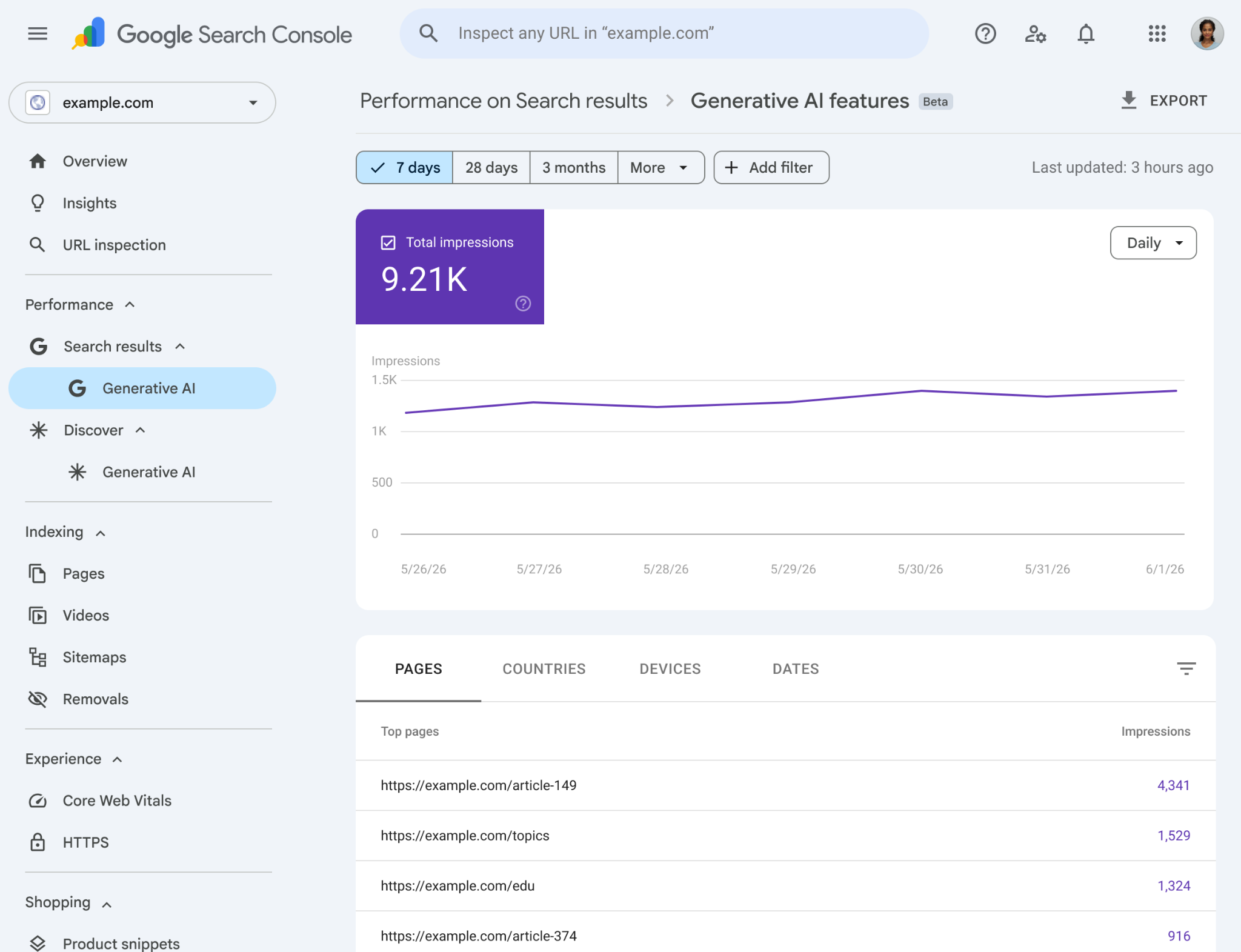
Measurement is where GEO must become more accountable. The Google Search Central announcement dated 3 June 2026 describes dedicated reporting for AI Overviews and AI Mode, with global availability reported by 31 August 2026. Check the reports and definitions available in your own account. Google reporting should not be treated as a dashboard for ChatGPT, Claude or Perplexity.
Use three separate views. First, record visibility: whether your business appears for a documented set of relevant questions, and whether its details are correct. Second, track website activity: identifiable AI referrals, useful visits and enquiry actions. Third, examine commercial outcomes: qualified leads, appointments and sales. These measures answer different questions; combining them into one headline score can obscure what changed.
For a practical baseline, choose a small, repeatable set of customer questions and record the date, platform, wording, mentions, citations and factual errors. Treat the results as a sample, not a market-share estimate. Ask new leads how they first heard about you, but allow “not sure” and multiple influences. A customer’s recollection is useful evidence, not perfect attribution.
MarTech Cube recommends attention to assisted conversions: situations where an earlier interaction contributes to a later enquiry or sale. For an SME, that means resisting the urge to credit only the final click. Equally, do not assign every unexplained enquiry to AI. Keep reported observations separate from assumptions.
For your first month, we recommend a modest sequence: establish a baseline, correct business information, improve your most important service pages, then review lead quality alongside visibility. Set targets from your own starting point—not from the reported 600% market figure. A visibility increase without suitable enquiries is a reason to investigate, not automatically a success.
The conclusion is straightforward: GEO deserves a place in the marketing plan, but not an exemption from commercial scrutiny. Start with a GEO visibility assessment and work with Performance Marketing Lab to identify which information, content and measurement gaps your Singapore SME should address first.
Sources
- MarTech Cube: “Generative Engine Optimization Is Now a Mainstream Marketing”, 19 October 2026. Source for the main story and the 600% AI-referral growth and 60% zero-click figures attributed to HubSpot (2026). Those statistics are cited second-hand here; the supplied material does not include the underlying HubSpot methodology.
- The Straits Times: “AI adoption among businesses in Singapore rises”, 5 October 2026. Source for SME AI adoption of 14.5% in 2024 and 23.4% in 2025. The percentage-point and relative-growth calculations in this article are derived from those figures.
- Google Search Central Blog: “Introducing Search Generative AI performance reports in Search Console”, 3 June 2026. Source for the reporting announcement and the reported global rollout by 31 August 2026.