Summary: AI adoption among Singapore SMEs reached 23.4% in 2025, up from 14.5% in 2024, according to The Straits Times on 5 October 2026. Separately, Similarweb reported on 10 June 2026 that Google AI Overviews appear on more than 20% of search queries, putting AI-generated answers firmly on the marketing agenda. These figures measure different things: businesses using AI internally and searchers encountering AI answers. For SME owners, the practical response is to retain SEO while adding generative engine optimisation, or GEO: making business information easier for AI systems to find, interpret and potentially cite.
Key Takeaways
- SME AI adoption increased by 8.9 percentage points, from 14.5% in 2024 to 23.4% in 2025. That is approximately 61% relative growth, calculated from the figures reported by The Straits Times.
- Large-business adoption reached 70% in 2025, versus 23.4% for SMEs. The resulting 46.6-percentage-point gap concerns AI adoption—not evidence that larger firms receive more AI recommendations.
- Overall enterprise AI adoption reached 23.5% in 2025, up from 14.7%. Singapore’s AI shift is measurable, but adoption alone says nothing about an individual business’s marketing effectiveness.
- Google AI Overviews appear on more than 20% of search queries, according to Similarweb’s June 2026 report. That is more than one in five queries in its reported coverage, not a Singapore-specific usage estimate.
- Start with four separately tracked platforms: ChatGPT, Gemini, Claude and Perplexity. Use the same documented questions on each; the supplied research does not establish a single citation or recommendation rate across them.
Singapore’s AI story is no longer confined to large enterprises. In its 5 October 2026 report, The Straits Times reported that SME AI adoption rose from 14.5% in 2024 to 23.4% in 2025. Overall business adoption increased from 14.7% to 23.5%, while adoption among larger businesses climbed from 62.5% to 70%.
Those numbers deserve attention, but not exaggeration. Using AI to draft emails or analyse documents is different from being recommended when a prospective customer asks an AI assistant for a service provider. The same report highlights an ongoing gap in effectively applying AI to data analytics and business intelligence. Buying access to a tool is not the same as building a useful capability.
As of 28 October 2026, the marketing question is therefore straightforward: can a prospective customer encounter an accurate, useful description of your business inside an AI answer? Similarweb’s separate finding—that Google AI Overviews appear on more than 20% of queries—makes this worth testing. It does not prove that Singapore customers have abandoned search results, or that every SME urgently needs an expensive GEO retainer.
(The Straits Times, 5 October 2026)
(The Straits Times, 5 October 2026)
(The Straits Times, 5 October 2026)
(Similarweb, 10 June 2026)

1. AI adoption is not AI visibility
The most important distinction in this story is also the easiest to miss. The 23.4% SME adoption figure measures businesses using AI. It does not measure how many businesses appear in ChatGPT, how many customers use Gemini to select suppliers, or how much revenue comes from Perplexity referrals.
Those are separate questions requiring separate evidence. An accountant in Tanjong Pagar could use AI extensively for internal workflows yet have a website that barely explains its services. A tuition centre in Tampines could use no AI internally but publish clear, current information about subjects, class levels, fees and locations. Neither example establishes which business an assistant would recommend; both illustrate why operational adoption and public visibility need different audits.
GEO means preparing your publicly available information so generative AI systems can understand and potentially reference it. It overlaps with search engine optimisation, or SEO, rather than replacing it. Accurate service pages, accessible websites and credible supporting evidence are sensible foundations for both.
The opinion here is deliberate: do not abandon SEO because AI adoption is rising. Add an AI visibility check to your existing marketing measurement. Our guide to GEO agencies in Singapore provides a starting point for understanding the work before commissioning it.
Nor should the 46.6-percentage-point adoption gap become a scare tactic. The supplied research does not measure GEO spending or AI-generated leads by company size. A smaller business should prioritise factual clarity and evidence, not try to match an enterprise’s technology budget.
2. More AI answers mean a broader visibility problem—not the death of clicks
In its 10 June 2026 zero-click marketing report, Similarweb states that Google AI Overviews appear on more than 20% of search queries. A zero-click interaction is one in which a user gets enough information without clicking through to another website. An AI Overview appearing, however, does not automatically mean the user makes no click.
This distinction matters commercially. The supplied figure is not a 20% traffic-loss estimate. It also does not tell us the prevalence of AI Overviews for Singapore dental searches, renovation enquiries or legal-service comparisons. Use it as a reason to investigate your own exposure, not as a forecast for your business.
Consider a hypothetical customer asking about aircon servicing in Ang Mo Kio. A useful answer might address service scope, call-out charges, appointment availability and whether chemical cleaning is included. A provider whose public information leaves these questions unanswered gives both customers and automated systems less material to assess.
Similarly, a Bishan dental clinic should explain its actual treatments, practitioner credentials and booking process without promising clinical outcomes. A Queenstown renovation contractor should distinguish completed projects from illustrative concepts and state what a quoted package excludes. These are recommended information practices, not examples of measured ranking improvements.
Industry suppliers are responding to this shift. A Kaizenaire service announcement published by Macau Business describes an expanded offering covering SEO, answer engine optimisation and GEO. Treat that as evidence of how services are being marketed—not independent proof that GEO guarantees citations, recommendations or revenue.
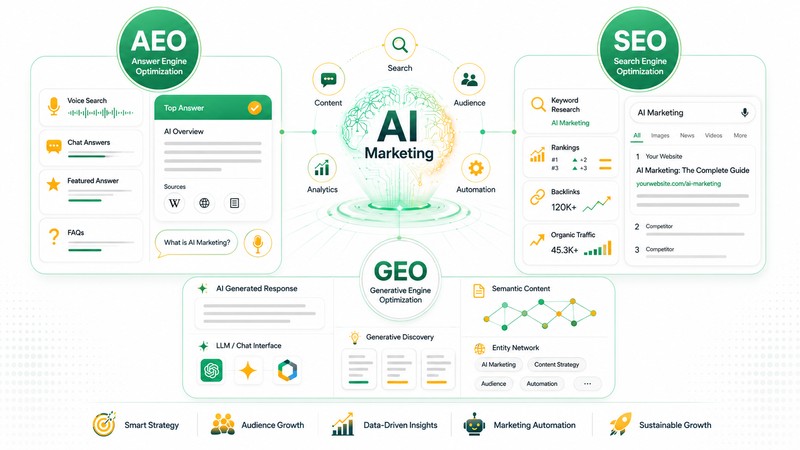
3. Make your business easier to identify, understand and check
Our recommended starting point is not producing dozens of generic articles. It is removing ambiguity from the pages that describe your business. This is a practical editorial approach, not a claim that any particular page format guarantees AI inclusion.
First, establish one consistent business identity. Check your trading name, address, telephone number, website and service descriptions across your own pages and important public listings. A Woodlands aircon servicing company should distinguish its office address from the areas it serves. A Jurong tuition centre should identify which programmes are offered at that branch, rather than imply every programme is available everywhere.
Our entity consistency guide explains this approach. “Entity” simply means the identifiable business, person or place being discussed. Consistency helps readers distinguish your company from similarly named organisations; it is not a promise that an AI system will select you.
Second, answer real buying questions directly. For a Tanjong Pagar law firm, that might mean explaining the matters it handles, how an initial consultation works and whether fees are fixed or assessed after reviewing the case. For an accountant, it could mean defining what is included in a bookkeeping package and what requires a separate quote.
A useful page gives a short answer first, then qualifications, scope and supporting detail. Our direct-answer content guide covers this structure. Do not publish invented starting prices or broad claims such as “Singapore’s best” simply to make the answer sound decisive.
Third, make evidence inspectable. Use genuine project descriptions, attributable qualifications and clearly dated service information. Where client confidentiality applies, explain limitations rather than inventing identifiable examples. The goal is content that a prospective customer can verify, whether they arrive through Google, an AI citation or a referral.
4. Run a 30-day test before buying a bigger programme
The following is a proposed testing framework, not a performance benchmark derived from the research. Its purpose is to replace assumptions with a small, repeatable record of what AI systems say about your business.
Days 1–7: record a baseline. Write 12 questions covering three customer needs: finding a provider, comparing options and checking your brand. Run them across ChatGPT, Gemini, Claude and Perplexity. That creates 48 initial observations. Record the date, exact prompt, available model or search mode, answer, cited links and whether your business appears.
Use realistic questions without confidential customer information. Examples include “What should I compare when choosing a renovation contractor in Queenstown?” and “Which questions should I ask a tuition centre in Tampines?” Avoid inserting your brand into every prompt: that tests recognition when prompted, not unprompted discovery.
Days 8–14: correct factual weaknesses. Review your contact page, core service pages and important listings. Fix inaccurate locations, outdated services and contradictory package descriptions. Prioritise errors that would mislead a customer over cosmetic changes intended only to appeal to an algorithm.
Days 15–21: improve a small set of useful pages. Choose three high-value service pages and answer the questions your team repeatedly receives. Add scope, exclusions, location information and evidence where appropriate. Keep an edit log so you know what changed.
Days 22–30: repeat and compare. Run the same prompts under comparable conditions. Separate a brand mention from a linked citation, an explicit recommendation and a factual error. Results can vary between runs, so a single appearance should not be treated as a durable ranking.
Then connect visibility to commercial evidence. Ask new leads how they found you, examine identifiable AI referral traffic where available, and record qualified enquiries. Do not add AI mentions to website visits and label the total “leads”. The supplied sources provide no universal conversion benchmark for these platforms.
For an initial review, use Performance Marketing Lab’s GEO Score as a starting point for identifying questions to investigate—not as proof of future recommendations. With SME adoption up approximately 61% relative to 2024, the sensible move is disciplined testing, not panic buying.
Performance Marketing Lab helps Singapore SMEs assess AI visibility and build clearer, evidence-led content for discovery across ChatGPT, Gemini, Claude and Perplexity.
Sources
- The Straits Times: “AI adoption among businesses in Singapore rises; digital economy accounts for larger share of GDP”, 5 October 2026. Source for adoption figures and the reported AI integration gap. Percentage-point differences and relative growth are calculated from those figures.
- Similarweb: “Zero-Click Marketing: What the 2026 Data Means”, 10 June 2026. Source for the reported AI Overview prevalence. The supplied Similarweb image URL is a tracking endpoint, not an editorial photograph, so it has not been embedded.
- Macau Business: “Kaizenaire Expands Its AI Marketing Services With SEO, AEO And GEO”, publication date not supplied. Cited as a commercial service announcement, not independent effectiveness research.