Summary: Google’s AI Overviews appeared for just under 25% of tracked queries in July 2025 before falling below 16% in November, according to research reported by Search Engine Land on 16 December 2025. Meanwhile, the share of AI Overviews appearing alongside advertisements rose from approximately 3% in January to roughly 40% in November. For Singapore SMEs, these findings argue against treating AI search as either an unstoppable replacement for website traffic or a passing experiment. The practical response is to retain useful SEO work while making your business easier for AI systems to understand, reference and accurately recommend.
Key Takeaways
- AI Overview visibility reversed sharply: coverage fell from just under 25% of tracked queries in July 2025 to less than 16% by November. A single visibility snapshot is not a dependable marketing strategy.
- Ads became much more common beside AI answers: their presence rose from approximately 3% in January 2025 to roughly 40% in November. Paid advertising and AI-generated answers are coexisting, not operating in separate worlds.
- The underlying analysis covered more than 10 million keywords. That makes it useful directional evidence, but not a Singapore-specific forecast for your business.
- Singapore’s digital baseline is already high: 96.4% of businesses adopted at least one of six measured digital areas in 2025, up from 95.1% in 2024. This is not the same as saying 96.4% adopted AI.
- Interest in GEO is accelerating: Ahrefs reports a 997% increase in search volume for “generative engine optimization” over 18 months. Rising interest is a reason to investigate—not proof that a GEO service will deliver sales.
Google’s AI-search rollout did not move in a straight line. In its 16 December 2025 report, Search Engine Land described an analysis of more than 10 million keywords: AI Overview visibility peaked at just under 25% in July before retreating to less than 16% by November. The report linked that pullback to Google refining its handling of commercial and navigational queries—searches about buying something or finding a particular business or website.
The commercial picture changed too. Advertisements appeared alongside approximately 3% of AI Overviews in January 2025, rising to roughly 40% by November. The study also reported improving click-through rates for keywords featuring AI Overviews as the year progressed. That challenges the blanket claim that an AI answer inevitably eliminates website visits, although it does not establish that AI Overviews caused the improvement.
As of 20 October 2026, these remain historical findings, not a live measurement of Google’s current Singapore results. Their value is strategic: they show why SME owners should resist absolute predictions about AI search. Your marketing plan needs to survive changes in where answers appear, which sources are referenced and whether customers click through.
(Search Engine Land, 16 December 2025)
(Search Engine Land, 16 December 2025)
(The Straits Times, 5 October 2026)
(Ahrefs, 2026)
1. The real lesson is volatility—not the death of SEO
The movement from nearly 25% coverage to below 16% matters because it exposes a weakness in sweeping AI-search predictions. Even within the same year, Google changed how frequently it displayed the feature. A business that rebuilt its entire acquisition plan around July’s coverage would have been planning against a moving target by November.
But the opposite conclusion—“AI answers are shrinking, so ignore them”—is equally unsupported. The Search Engine Land findings concern Google AI Overviews within a particular keyword dataset. They do not measure recommendation rates on ChatGPT, Gemini, Claude or Perplexity, and they do not establish how frequently Singapore consumers use those platforms before buying.
GEO, or generative engine optimisation, means making a business and its information easier for AI answer systems to identify and reference accurately. It should complement search engine optimisation, not become an excuse to abandon accessible webpages, useful service information or accurate business listings. Our guide to choosing a GEO agency in Singapore explains the scope owners should scrutinise before buying services.
Consider an aircon servicing company in Tampines. “Aircon servicing Tampines” and “Why does my aircon keep leaking after servicing?” represent different customer needs. A sensible content plan addresses both: a clear local service page for someone ready to enquire, and a practical explanation for someone diagnosing a problem. This is a recommended approach, not a claim that either query currently triggers an AI Overview.
The decision rule: do not choose between rankings and AI references. Build information that serves customers in either interface, then measure which channels actually contribute to enquiries.
2. A 40% ad presence makes the paid-versus-AI debate too simplistic
The rise from approximately 3% to roughly 40% refers to advertisements appearing alongside AI Overviews. It does not mean 40% of all searches displayed those ads, nor does it reveal the share of clicks advertisers received. Keeping that denominator straight prevents a striking statistic from becoming a misleading budget argument.
For SME owners, the implication is straightforward: an AI-generated answer and a paid advertisement can be present in the same search experience. There is no sound basis in these findings for assuming that improving AI visibility removes the need for paid search—or that buying ads secures a recommendation inside the answer.
Take a law firm in Tanjong Pagar and an accounting practice in Bishan. The law firm might publish a carefully reviewed explanation of its consultation process; the accountant might explain what documents a new client needs before an initial meeting. Both can separately assess paid campaigns against qualified enquiries. Neither should treat an AI mention as equivalent to an appointment.
The reported improvement in click-through rates deserves similar care. Without a precise uplift in the supplied findings, there is no responsible percentage to promise. Nor does an improving trend prove that AI Overviews increased traffic compared with an otherwise identical search result without them.
Track outcomes separately: search visibility, identifiable AI referral visits, enquiries and qualified leads. Add a “How did you hear about us?” field where appropriate, while recognising that customer recollection is imperfect. The objective is a useful business picture, not a falsely precise attribution report.
3. Singapore’s 96.4% digital adoption figure raises the bar—but is not an AI adoption rate
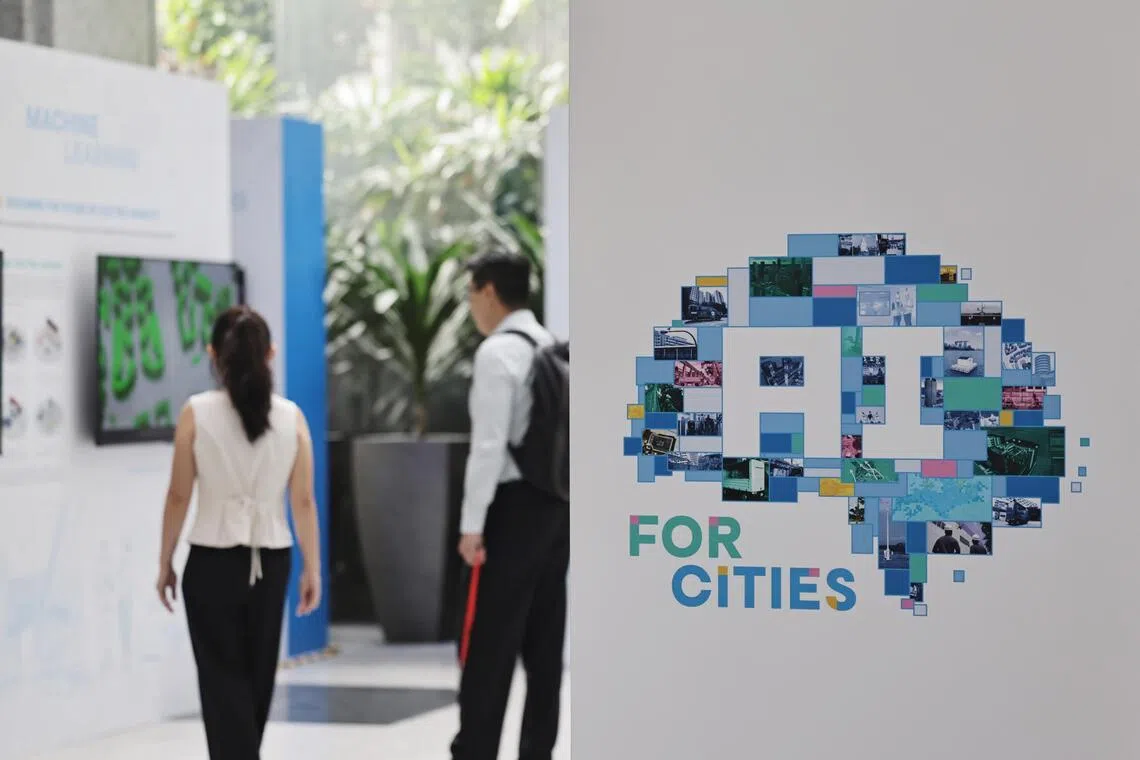
The Straits Times reported on 5 October 2026 that 96.4% of Singapore businesses had adopted at least one of six measured digital areas in 2025, compared with 95.1% in 2024. That is an increase of 1.3 percentage points. AI was included among those areas; the statistic does not say that almost every business uses AI.
This distinction matters. “Everyone is already using AI” is a poor sales pitch when the cited evidence measures broader digital adoption. The useful question for an SME is narrower: does your existing digital presence explain your business accurately enough for customers—and systems retrieving that information—to understand it?
Start with factual consistency. A tuition centre in Ang Mo Kio should make its subjects, levels, location and contact details clear. If it also operates in Woodlands, its branch pages should distinguish the two locations rather than leave readers guessing which timetable or telephone number applies.
A renovation contractor in Queenstown should distinguish completed projects from illustrative designs and explain what a quoted package includes. A dental clinic in Jurong should clearly identify its practitioners and services, with clinical information reviewed appropriately. These are practical recommendations for reducing ambiguity, not guarantees of AI citation.
Performance Marketing Lab’s entity consistency guide covers this foundation. “Entity” simply means the identifiable business: its name, locations, services and other distinguishing facts. Consistency is not about repeating a slogan everywhere; it is about avoiding contradictory descriptions.
Next, answer the questions customers actually ask. Our direct-answer content guide outlines the approach: put the useful answer near the question, explain relevant conditions and support factual claims. A clear explanation of what is excluded from a service can be more valuable than another page declaring the business “the best”.
4. A practical 90-day response to the GEO rush
Ahrefs reports that search volume for “generative engine optimization” rose 997% over 18 months. That measures interest in a term—not SME adoption, customer demand for your services or return on investment. Treat it as a signal to investigate carefully, not a deadline to sign an agency contract.
The following 90-day plan is an editorial recommendation, not a timetable validated by the cited studies. Its purpose is to create a manageable test before committing a larger budget.
- Days 1–30: establish a baseline. Select a small, fixed set of customer questions covering services, locations and buying considerations. Check how your business appears across relevant search and AI platforms. Record the date, exact wording, cited sources and factual errors. Do not combine different platforms into one supposedly universal ranking.
- Days 31–60: repair and publish. Correct inconsistent business details. Improve important service pages and publish answers to genuine pre-purchase questions. For a Tampines aircon company, that might mean explaining the difference between routine servicing and chemical cleaning, including when an inspection is needed.
- Days 61–90: repeat and evaluate. Recheck the same questions under documented conditions. Compare factual accuracy, relevant mentions, identifiable referrals and qualified enquiries. Keep a change log so you know what was updated before interpreting any movement.
Repeated checks matter because one answer is only one observation. The Google coverage changes reported for 2025 demonstrate why visibility should be observed over time; they do not provide a universal sampling method for other platforms. Be transparent about the limits of any monitoring report.
Before approving spend, ask an agency what it will change, what it will measure and what it cannot promise. A credible proposal separates deliverables—such as corrected location pages—from outcomes that depend on third-party platforms. Guaranteed recommendations across ChatGPT, Gemini, Claude and Perplexity should invite scrutiny, not confidence.
Start with a documented baseline through the GEO Score assessment, then prioritise the gaps that matter to customers. The strongest response to a volatile channel is not more hype. It is clearer information, disciplined testing and a budget tied to business outcomes.
Performance Marketing Lab helps Singapore SMEs assess their AI-search visibility and build a practical GEO plan alongside their existing marketing.
Sources
- Search Engine Land: “Google AI Overviews surged in 2025, then pulled back: Data”, 16 December 2025. Source for the keyword analysis, AI Overview coverage, accompanying advertisements and reported click-through-rate trend.
- The Straits Times: “AI adoption among businesses in Singapore rises; digital economy accounts for larger share of GDP”, 5 October 2026. Source for the 2024 and 2025 digital-adoption figures and the editorial image.
- Ahrefs: “5 AI Search Trends I’m Seeing in 2026, Backed by Ahrefs Data”, 2026. Source for the reported 997% increase in search volume for “generative engine optimization”. The additional supplied image URL is a Facebook tracking pixel, not an editorial photograph, and has therefore not been embedded.